

Organizational transformation is ubiquitous today, as AI and advanced technologies reshape workflows, employee expectations continue to evolve and global complexities drive a needed reimagining of organizational roadmaps.
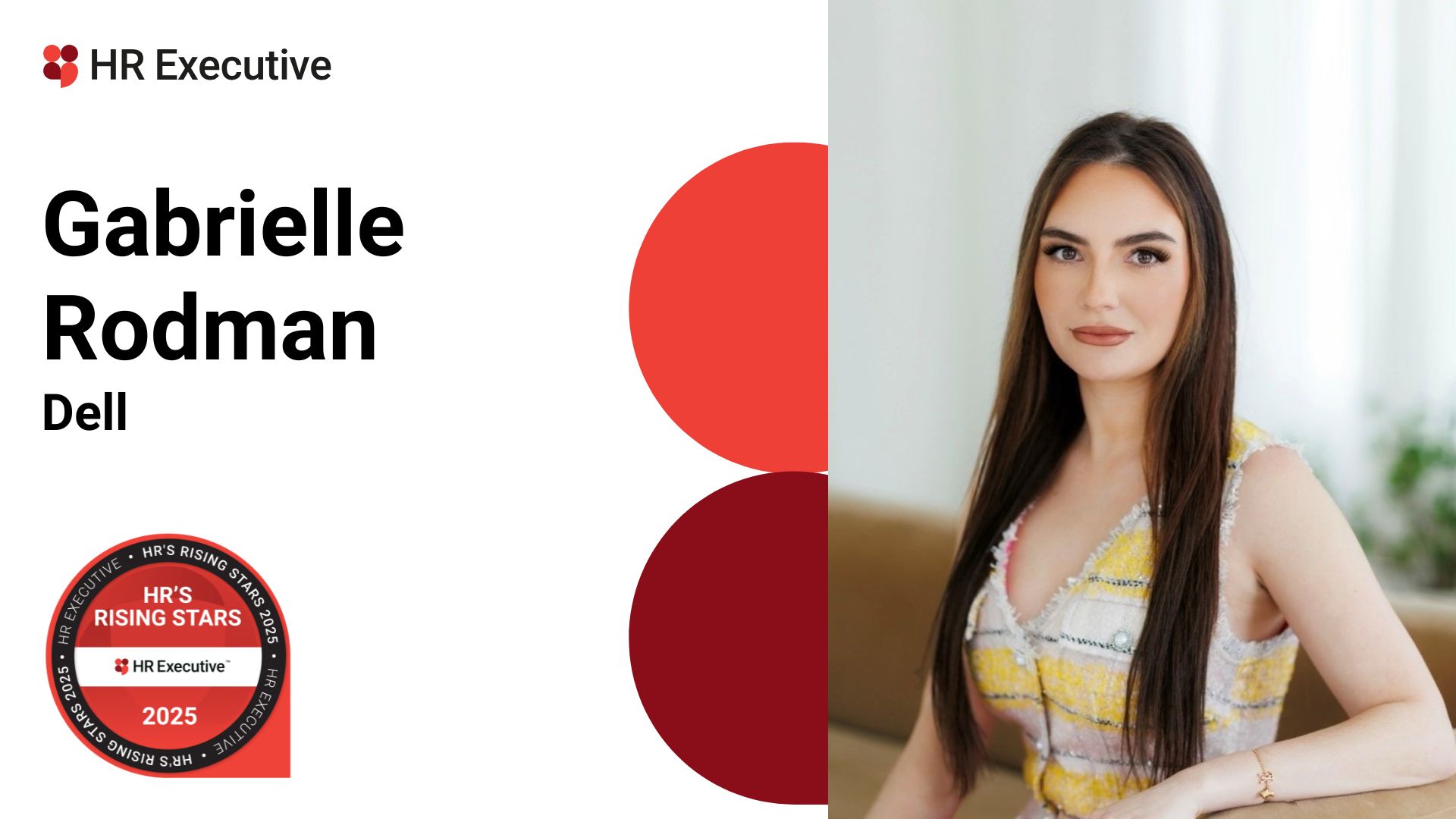
That environment is highlighting the criticality of investments in employee and leader development, which are the chief focus of HR’s Rising Stars winner Gabrielle Rodman, global senior talent projects & programs lead at Dell Technologies.
Rodman says she has witnessed the influence of training and education on a workforce and the business throughout her career—from L&D internships, including at Dell, to several global talent development positions at the tech giant to her completion of the Women’s Leadership Program at Yale University and the launch of her own career consulting business.
“That connection between learning and transformation, both at an individual level as well as an organizational level, is what drew me to this space and what really continues to motivate my work,” Rodman says.
Recognizing the influence of AI, the disruption of organizational restructuring and the need for modernization, Dell rolled out a global executive training program led by Rodman.
Internal feedback mechanisms and performance data, Rodman says, suggested to her team that a new approach to leader training was needed.
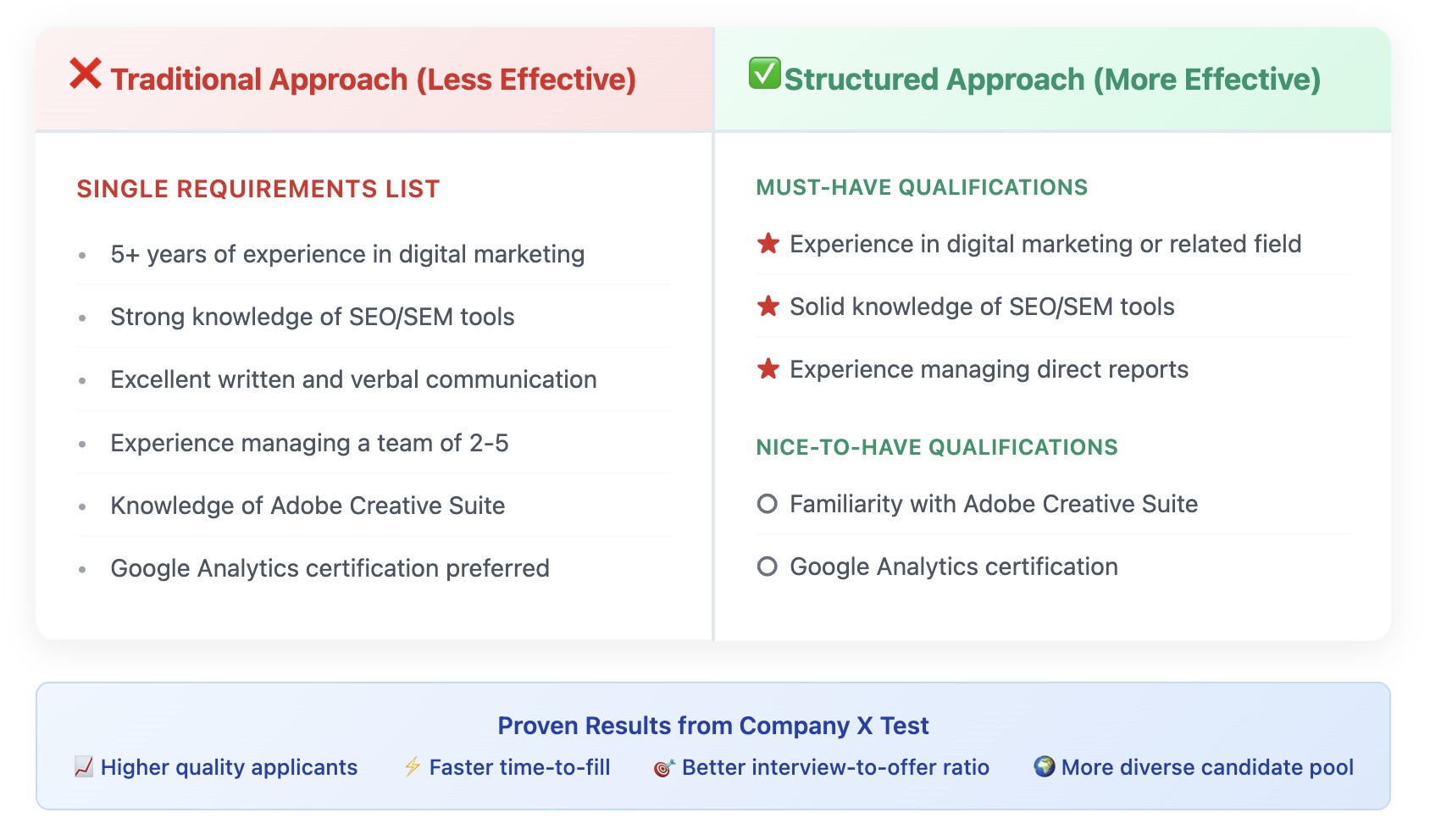
“Traditional, one-size-fits-all training is not really effective anymore,” she says. “Our evolving business landscape really calls for a more flexible, growth-oriented mindset and training strategy.”
Related: Meet the 2025 HR’s Rising Stars
With an emphasis on modernization and growth, and an underlying commitment to retaining culture, Rodman led the design, development and execution of Leadership Imperative, which trained more than 10,000 leaders worldwide. The effort leveraged both in-person and virtual sessions—120 in total—translated across eight languages.
The “strategic, hybrid” approach, with in-person training at select Dell hubs, complemented by virtual training to accommodate geographical and time zone variation, helped the organization “meet leaders where they are and maximize that connection with both impact and efficiency,” Rodman says.
Rodman says the program is expected to bring more aligned and agile decision-making as well as stronger collaboration across teams—all critical to drive growth, especially during uncertainty.
“Spans and layers are always changing, and leaders are being impacted by those changes,” Rodman says. “This program prepares leaders to navigate complexity, to lead during times of change and ambiguity—while directly supporting those broader organizational goals.”
Shaping strategy with data and feedback
Rodman was also instrumental in launching a development program for high-potential talent. Rolled out to nearly 300 top employees across the U.S., Europe, the Middle East, Africa, Asia-Pacific and Japan, the initiative was designed to help boost engagement and prepare the organization with a robust pipeline of future leaders.
Rodman says that, despite a strong employee value proposition, the organization was noting increases in turnover among top talent. Data suggested that such employees weren’t confident in their growth potential at Dell and were craving more challenges, with certain departments like engineering, R&D and customer success at particular risk for the departure of high-potentials.
Data was “absolutely foundational” in informing her team’s direction, Rodman says, as was employee feedback.
“We used a combination of sources to identify any key gaps and then created a program that’s focused on growth and long-term development,” she says.
Rodman was also key to the rollout of global career development workshops for more than 5,000 Dell employees, which drove a 60% increase in training adoption.
For any talent strategy her team spearheads, she measures success through a number of lenses: skill growth, program completion rates and NPS.
“All of those coupled together are indicators that help us understand both engagement and impact, which are the most important,” she says.
See also: Why HR leaders must embrace a new era of learning and development
What’s next in leadership development?
Looking ahead, Rodman is now leading the development of a nomination-based program for senior leaders and managers, with a focus on preparing them to be adaptable, agile and able to lead with little direction.
Rodman is prioritizing diversity in the program delivery; beyond facilitator-led sessions, the effort will involve keynote speakers, simulation-based learning and more.
“When you’re building a program globally that’s remote, you have to create a rich experience and really strategically think about how you can diversify this program,” she says.
The work supports her overarching priorities of helping Dell’s talent ride the wave of change, particularly around AI. Rodman says she’s consistently keeping the influence of AI—from how it’s changing skills needs to its potential in development offerings—top of mind.
“Everyone throws around the term AI, but I think we need to focus most on how to leverage it effectively; in this space of leadership development, how can we utilize it as a benefit?”
Why education is ‘critical’ for learning leaders
Greg Hessell, managing director, Global HR Practice, at Korn Ferry and an HR’s Rising Stars judge, calls Rodman the “epitome of the Rising Star award.”
“While completing her degrees, she accepted internships with several well-known and respected organizations and HR leaders who helped to ignite her interest in learning and leadership development,” he says. “As a rising star at Dell Technologies, moving through four roles in four years, her global depth in learning has allowed her to build an HR foundation that will continue to be the impetus in her career journey.”
With a career focused on developing employees and leaders, it’s unsurprising that Rodman takes her own education seriously. In addition to the recent Yale program, Rodman says she’s always seeking learning opportunities through both formal initiatives and her peer networks.
“I get involved in stretch projects and opportunities for cross-functional collaboration because the HR department is quite large and there’s so much rich work happening,” she adds.
Staying informed about shifts in the learning, leadership development and broader HR spaces, she says, is “absolutely critical” for learning leaders today.
“If you’re not staying up to date, it’s going to be a disadvantage,” she says. “Everything is evolving rapidly, and you have to stay in the know.”
Rodman says she envisions her own career evolving, as her drive for connecting learning with organizational design and culture enables her to continue to scale her impact.
“I aspire to make massive contributions at an enterprise level, ultimately shaping what a full-cycle employee experience looks like,” she says.
Rodman and the other 2025 HR’s Rising Stars will be honored during the inaugural HR Icons Awards Evening, taking place Sept. 15 at Mandalay Bay in Las Vegas as part of the HR Tech conference.